Showing posts with label education. Show all posts

Sunday, February 14, 2016

Metaphor Shapes Our World

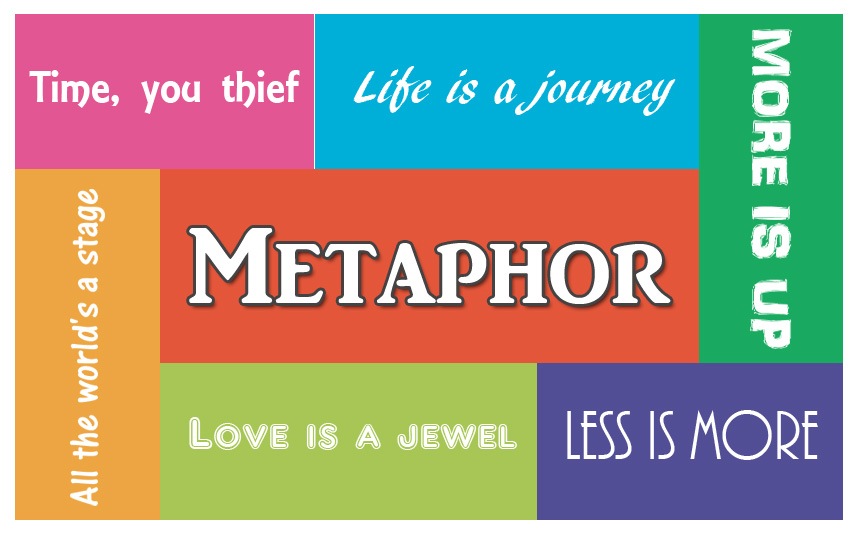
I recently read the book, I is an Other: The Secret Life of Metaphor and How it Shapes How We See the World. It is about how metaphor is embedded in all languages and even, as Emerson says, "Language is fossil poetry" Many words and phrases we use are actually metaphors, even though we don't always think of it that way. It's not just in phrases such as "Love is a red, red rose." (Shakespeare), but when we say things like "I don't get it." The metaphor is embedded in the phrase. We even will extend the metaphor by saying, "I don't grasp your meaning."

Metaphor is also a powerful way of shaping the way we think about things. Advertisers, politicians, newscasters know this. For example, when the US was fighting the First Gulf War, General Schwarzkopf said that a certain attack would be a "Hail Mary pass." Now that metaphor cast the US Armed Forces in the underdog role, and thus elicited more sympathy for the war by the US public. (Or at least that was the goal).

Metaphors force us to think and confront ideas in new and different ways. We use lots of metaphors implying fighting/war when we're talking about cancer, specifically. We fight, we battle, we're survivors, etc. Some studies have shown that these metaphors can have a negative effect on some patients who don't believe they're going to win. The mindset of battle can actually have a negative consequence.

My personal experience with metaphors came to a head with our new ad campaign at school. I was put off and hit hard by the phrase used: "Custom Fit Learning." Now that shouldn't have been such a hard punch to me, as I'm familiar with the concepts of individualized/differentiated learning and instruction. Somehow, those phrases did not intimidate me as much as "custom fit." That was terrifying and seemed impossible for me. It helped to think carefully about this. Do I want the opposite: "One size fits all" learning? Well, no, I don't like that, either. So after thinking about the metaphor it became clearer to me what the goal of education should be. So I see custom fit as an ongoing process, and thus seems less intimidating. The main point being that it was only when I saw the metaphor, that it got me to think more deeply and clarified what individualized/differentiated was supposed to be about, anyway.

Metaphor also is used by students who receive a grade. "I got an A." As a teacher, I have thought about "giving the student a grade." The downside is it implies that the student is given the grade and the teacher is giving, which is top-down. The teacher is higher and handing the grade down. It can even imply, at least in many students' thinking that I've noticed, that the student has no control over the grade. I've been thanked for giving a certain grade and I try to explain that it was their work and effort. Now, I'm thinking about a different metaphor for grading. How about "show"? I guess the fancy word is "demonstrated", but I think it easier for students to think of "showing" or "displaying" something. The responsibility then shifts from teacher to student. It also takes some of the stigma off a grade, I think. The student may be a great reader, but write little and talk little about their reading. If we let the metaphor of "show" sink in to the culture at large, the student, and parents hopefully, will understand that low grade in reading is only on what they have "shown" or "displayed." As I say to students often, "I'm not a mind reader. I can only go by what you show me. If you hand me a blank page, well I don't have much of a choice, do I?" I really wonder

how different parents and students would react to a grade if they really thought of it as something "shown" and not "given."

Sunday, January 19, 2014

What Does Good Education Look Like?

I had to come up with 2 or three sentences about what good education looks like. I believe that a good education is human, so is full of contradictions and actions that are both positive and negative. For example there is no forgiving without something TO forgive.  I couldn't think of sentences, only verbs, so I made this Wordle:


Now I'm thinking I should have included words like boring, confronting, calming. What other words could I have used?

Thursday, July 04, 2013

Godsmacked

I'm taking a teachers' course this week on how to write units from a Christian perspective. Now, you may not know this, but writing and organizing a unit under one big question is hard work. It's a lot of thinking and writing collaboratively with your grade level partners that you don't normally have time for during the course of a school year.

Now, I had such high hopes for this course because it said that in the original description that you would have 3 complete units. I, and my colleagues, assumed this would save tons of time come September and have a good chunk of the year planned. I mean, 3 units can take until after Christmas to complete!

Well, as the course progressed, we found that 3 was a very high number and that "complete" meant, according to the instructor, 3 "skeletons" of units because "units are not finished until you  actually teach them. That's when you flesh them out!" Meh. What a rip-off. So the grumpies set in. I became more and more negative as the first two days went by and we were given a total of maybe one hour or so to actually write our units. I was discouraged as the instructor kept repeating and drumming into us the importance of what are called "Through Lines." For  example, one Through Line is called Servant Worker. If a unit was targeting the idea of Servant Worker, then the students would be led through an activity that involved actual service to the community.

Today, I woke up dreading today thinking that what we were to do, a field trip to Granville Island in Vancouver, would be a "time filler" that would keep us away from precious unit writing time. Our assignment  was a bit more interesting than just a way to pass a couple hours. We needed to take pictures of things that represent each Through Line and present them to class. We were broken into groups of 3. Of course we had no choice about who we went with. Teachers do this. I do this. Students hate this. I hated this, too, I realized. My group was two other guys, one I know quite well, one I just met today. Both of them love and know Granville Island well. Both of them were excited about one thing: The Granville Island Brewery.One of the guys had free passes to a tasting tour of the brewery. Now the guy I know already says, "Well, Matt doesn't drink at all." (It's true, I don't. It's for many different reasons, none of which are religious.) I said I'm not offended by it, I just won't drink it. They talk me into it and we're off to the brewery. I'm wondering what I'm getting myself into as I'm being told the beer-making process is quite fascinating in itself (Turns out it is. I know what malt and hops are now. I learned something new!)

We get there and find out that the tour had enough people and already started. The next tour is too late for us to catch our bus back on time, so we can't do the tour. The lady there (I feel sooo guilty for not remembering to ask for her name now) says she'll happily do a tasting session with us, which my two accomplices readily agree to. I go with them, thinking I will just listen and learn. She looks at me and astounds me with what she does next. She offers me a free ice tea or soda (organic, locally made, of course!). That may seem like a "so what" moment to others, but, for me, at that moment, I felt God's grace. She was acting as a Community Builder (yup, that's a Through Line) to me. She was not allowing me to feel left out and including me. I chose the root beer you see in the picture. It was really good. I felt like, "Yes, I do belong here. Right now, this is right."

I was Godsmacked while I was there. Smacked so hard that I suddenly understood, in a deeper and more profound way what these Through Lines mean. I was smacked upside the head by God through an act of generosity at, of all places, a brewery! I guess this course is worth it after all.

Friday, April 04, 2008

Subtle Fundamentalism

I spent a lot of time thinking about Fundamentalism over spring break - Yes, I think it's fun...why do you ask? - Anyway, I wrote a short summary paper about fundamentalism. Looking at the current so-called "war on terror", Craig Unger points out that this war is really a war about religious fundamentalism (both Islamic and Christian) versus the modern world. Terry Eagleton points out that fundamentalism is a "textual affair" - it 'worships' dead text. The very act of preaching should negate fundamentalism, because as soon as we open our mouth - we are interpreting in a new way. Paul Ricoeur shuddered at the very idea of a "sacred text" - because Christianity is supposed to be about worshipping Christ, not the very text that speaks of him.

Fundamentalism is often characterized as obvious - thundering, smashing its way through society. However, I'm beginning to realize how subtle it can be. I stumbled upon this quote in a magazine for Christian school teachers:

"If Christianity is truth, then Christian education is the only true education and therefore the only practical education. There is no education, no truth - nothing - without God, the eternal author of reality."

(quote is attributed to David Claerbaut, Faith and Learning on the Edge)

Oh, really? It seems like a nice comfortable, perhaps pithy kind of quote, but I will contend that it is an example of how subtle fundamentalism will be.

Let's unpack it a bit by looking first at its conclusion: no education without God, no truth without God... Right away, I begin thinking that the rain falls on the evil and the good, doesn't it? If this is true, then isn't this quote a slap in the face of any kind of public education. Does this mean that Muslims could never make an important discovery or speak truth - ever? Obviously, that cannot be true. Not every invention, every innovation, every insight on this planet was initiated and completed by a Christian.

Wait a second....let's back up to the If...then statement...

If Christianity is truth.....

Interesting assumption. The obvious question: Is Christianity truth? Well, I'm not so sure about that. What is Christianity? A belief system...worldview...an interpretation. Christianity is practiced by those who claim to be following Jesus. Christianity look, sounds, and is experienced differently by different people in different cultures in different ways. How can the practice of following Christ by truth?

Christ never said this. He did say: "I am the way, the truth and the life..." Perhaps we are proceeding from false assumptions or am I being fundamentalistic in my interpretation? *shudder* Well, let's put that aside for now....

So Christ/God is TRUTH. So it must follow that truth is embedded in Creation and all people, who are created in God's image, will respond to it in different ways. Therefore, an atheist may discover a deep, hidden truth that, yes, even Christians can benefit from.

Is Christian education the only 'true' education....nope, can't be. Well, at least it can't be based on this line of reasoning. Sometimes in the intense competitiveness between schools, we need to 'sell' the Christian school to make it 'look' better. Perhaps this kind of thinking is a result of that - for fundamentalism is, ultimately, a fear of non-being, of death, according to Eagleton. Some schools are just not able to compete against the government funding of public schools and are fighting for survival. Fundamentalism, ultimately, never works, though. Clearer thinking is needed.

Sunday, June 24, 2007

Back to School....Again...


I'm beginning my Masters degree on July 3. I'm 42 and I'm finally beginning my next degree. Where will it lead? Who knows...well...God does. I just discovered a fantastic quote from William Shakespeare: "We know who we are, not what we will be." I just feel that way now: stepping off into the unknown.

It hasn't been without its hitches, though. I found the registration process to be a bit confusing. I received a note of welcome into the Masters of Arts program in Inderdisciplinary Humanities from Trinity Western University . It's a degree that is more for me. I can't conceive of teaching all day and talking about teaching all night *shudder*. (If you haven't noticed, I'm getting kind of tired of education - same old problems in the same old cycles...) Anyway (I'm American and so I say 'anyway' not 'anyways' like the Canadians do.) the note says that "Incoming graduate students are not required to pre-register for courses."

"Even easier!" I think (incorrectly)

I start asking for pre-reading lists in March, thinking I can get a head start during Spring Break. I get e-mails of puzzlement and head scratching over what to do with this kid who's so anxious. At the end I get the syllabus for each course (2 courses) - would that be syllabi for plural? I get the books from Amazon (used of course) and get to it.

Well, that's that, right? Wrong!

I get an e-mail a couple of weeks ago saying that I haven't registered for my summer courses, so I better do it. I thought I was registered. I go to the website, which I'm convinced is out to get me, and find out how to register. Then I need to pay. They don't take credit card. What's with that?

I finally call a human being and figure out how to pay. Then I get to thinking:
"Do the teachers even know that I'm registered for the courses?"

Turns out to be a good question. The philosophy prof doesn't know that I'm registered and he's changed the syllabus. I have the wrong book!

Well, I ordered the books - there's 5 books, it turns out. I had one already. (used on Amazon - I'm not paying double through Trinity! Yes, it's literally double the price!) and, hopefully, I'll have the books before classes begin.

Maybe it's because I'm an old fart and the younger ones are so intuitive with computers they just know what to do. Oh, well..back to reading...

BIG PS - Ok, I'm an idiot - I just discovered that since I registered, I have a new e-mail at Trinity that has most of the info I've been missing.

Saturday, June 02, 2007

It's All Developmental


I've just realized that I'm getting old. Big news, eh? Well, as a teacher with a birthday in June - I get this double whammy every year. Now it's worse - Our local paper always prints the pictures of all the local high schools' graduates and I've realized that I've suddenly started to recognize the faces. The very first grade 3 class I’ve taught here is graduating high school. They are now entering the workforce, studying to become whatever – they might be the face behind the counter when I apply for another loan! That just blows my mind. When they sign their names, I’m the one who first showed them how to sign their names!

The upside of all this is that I have a bit more of insight into the process of education. And I can say, after all these years: It doesn’t work.

It comes down to one thing - young children cannot learn what they are not developmentally ready to learn. Children are not at the same developmental level at the same age. Dividing young children into groups by age is the same as dividing them by height. It makes no difference! In one grade 2 class, I have students who would be challenged in a grade 1 class and students who could run circles around most grade 4's.

This all developed from a workshop I prepared a few years back that involved teaching spelling. The long and the short of it is that as I watched grade 2 students struggle with spelling the word 'because' I saw that even if the word was on the wall for them to copy they still got it wrong. Now an intensely famous spelling guru,Rebecca Sitton , would say that it is because I'm 'not holding them accountable' - but I'm in their face (relax - in a gentle, primary teacherish kind of way) about it. They still miss a letter or two. Why? I'm convinced that it has to do with how developmental spelling ability is. In the book,Words Their Way , we find that all children will develop in spelling ability in the same progression. If you try to teach the long 'e' rule before they have mastered short vowels, they will not learn the silent 'e' 'rule' in any permanent way.

This leads to grade 1 teachers (big Canadian thing, btw: you say 'grade 1' not 'first grade'. Another thing: Canadian kids are younger than US kids in each grade. Canadian 4 year olds may enter Kindergarten with a December 31 birthday. That's the cut-off when most states have a cut-off in September) saying: "I taught the silent 'e' rule last year! What do you mean that she doesn't understand it???"

After wrestling with spelling, I began to see this pattern in other areas and they I realized: "It's all developmental." Then I realized the way we do education is not developmental. It only works for the kids whose development happens to match the curriculum. Most teachers don't bother with knowing the developmental level of all the kids because it's usually physically impossible to keep track of each child's ability in each level. Another problem: based on research largely done on US high school students - the educational culture believes that retaining young children even at a Kindergarten, grade 1 or 2 level is always wrong. This is a flat out myth.

If you want to eliminate failing schools: Start extending the time some kids spend in Kindergarten and/or grade 1.

If you truly want'no child left behind' then start from scratch and reinvent how education works. Question everything and be ready for the New Enlightment!

Sunday, February 25, 2007

Free Education for all???

I just had a quick flash of insight and I'm just putting it down here. Why do we insist on free education for all? Why do the well-off people or even those who could afford a minimal fee not charged? Why does it have to be free?

Why not have free education only for those who truly need it? I just thought of President Clinton sending Chelsea to public schools - why shouldn't the Clintons be charged for going to any school?

I'm not thinking that everyone pay full tuition - just that a user fee be charged for education. We now have this overgrown dinosaur called education - something that basically has been done the same way for 100 years and we think it should be free for all. We have a school close by to me, I think it's in Deroche, where most of the kids are First Nations and this school has basically no supplies, library, etc. The districts that collect huge amount of taxes should actually be paying into a pot - the neediest districts, i.e., lower-income - should be able to draw more than the 'richest'. The richest can use user fees to make up the shortfall in their money. Same thing for health care in Canada, by the way.

Now that I've solved the world's economic woes - I'm gonna have lunch.

Tuesday, January 30, 2007

Control Freak!!!

I used to be a control freak. I suspect that's a big reason I became a teacher. Teachers must be the ultimate in control freaks. They're actually the worst kind of control freaks imagainable - they are control freaks that usually get their way! Teachers are such control freaks, they have to go to workshops and classes to be taught that kids are actually capable of doing such things as sharpening pencils, handing out papers, thinking for themselves, etc. A teacher cannot stand to allow the kids time to explore without having planned every outcome, developed an exhaustive checklist, and laid out 'roles' for each child to play in a group setting. Teachers are so used to controlling their environment they have no problem, in an informal adult setting, to going 'SHHHHHHHHHHHHHHH!' right in your face. Your at a party and you're being controlled? There's a teacher behind it! I've learned that control of others is wrong over the past years, so I have changed a lot as a teacher - perhaps this is why I don't feel like I fit into education circles any longer? Hmmmm.....

Now, the most poisonous combination with teacher is religious teacher. Here's where the control freak religion kind of control melds with the control freak teacher. I am convinced by reading a bit of history that religion is about control, while Jesus wasn't about that at all. I'm feeling that Christianity and education does mix, but we have to get the 'religion' out of it. We need to look closely at how Jesus treated his disciples - he gave them choices, honored their ability to choose, etc. This is an idea I'm still developing, muddling over. So I'll stop here for now.

Sunday, May 14, 2006

Computers in Education, Part 2

"I hope for some sort of peace - but I fear that machines are ahead of morals by some centuries and when morals catch up there'll be no reason for any of it."
~President Harry S. Truman (quoted in McCullough, David. Truman. p. 415)

Pres. Truman wrote this shortly after touring the rubble that used to be Berlin shortly after Germany's defeat. He actually said this before he authorized the atomic attacks on Hiroshima and Nagasaki. It is an interesting comment and I wonder what we will say in the coming generations about our infatuation with technology. It makes it all the more important that schools come up with ways to incorporate the technology and guide students in the proper and safe use of technology, because they are involved, whether we like it or not! I'm thinking I should have titled this "Technology and Education", but there it is.

The first part of this article dealt with the largely downside of technology in education, but now I wanted to think and write more about why we need to incorporate even more technology in our schools.

An interesting article came out in the December 2005 issue of Educational Leadership. It's called, "Listen to the Natives" and it's written by Marc Prensky. He's coined the terms digital natives, which our students are. That is, they are the ones who are immersed in the culture. We (the adults/teachers) are the digital immigrants. We do some technology, but we speak with an "accent". We have to begin to listen to the students if we want to help prepare them for life in the 21st century.

I am becoming fascinated with the idea that we are approaching another "Enlightment" of sorts. As the postmodern culture begins to take over and leave the modern culture behind, there are new movements afoot. One of them that I am looking into very closely now is the emergent church.
Churches and Christianity must find a different way of thinking as it strives to bring the message of Jesus Christ to a different culture. But I digress....

In this article, Prensky shows how schools, as they are now, cannot prepare kids for the 21st century:

"Pragmatically, our 21st century kids' education is quickly bifurcating. The formal half, 'school', is becoming an increasingly moribund and irrelevant institution. Its only function for many students is to provide them with a credential that their parents say they need. The informal, exciting half of kids' education occurs 'after school'. This is the place where 21st century students learn about their world and prepare themselves for their 21st century lives."

It's funny how we herd kids, group them unwillingly, make them learn what they don't want to learn (and probably don't really need for the future, anyway). We make them shut up, sit still and take it in. I'm still guilty of this because I learned this way and it worked for me. The point is - it CANNOT work for today's kids!

I'm starting to feel increasingly restless with old style school and curriculum. As I have becoming more immersed in technology, I find that I can only express myself through technology. It's becoming a part of me - and it is even more a part of kids lives today. Banning the use of cell phones in schools, for example, could be leading to more problems that it will solve. The cell or blackberry has become an extension of our children's brains and they can't function without them. How about using the video games that our students are so involved in as a model of curriculum organization? It may seem silly, but many are giving it some serious thought!

An important thing to keep in mind that this doesn't mean we need lots of actual technology in the classroom. What we need to consider is how technology is actually changing the way kids think and process information. Children learn differently than the children of just a generation ago.

I get a pen and paper and it remains blank to me. I can't think of a thing to write. Give me a computer and I can't shut up! I need an electronic medium to talk out loud and give myself a voice now. How odd.... I wonder how much of an accent I still have...

I know this has been kind of a jumble of thoughts ~ maybe I'll come back and clean this up some day. Make it more presentable. But I had fun writing it and that, in the end, is what counts!

I found this cartoon and found it appropriate here. Sometimes I feel like this is what educators on low budgets are doing in the classroom...

Wednesday, March 29, 2006

Internet Safety for Children


I tell the kids that the Internet is a city, like Vancouver. They need guidance and supervision to get around the city. I wouldn't take them into certain parts of Vancouver - if I had a choice. If I did need to take them into any part of Vancouver - I would make sure I, or another responsible adult, was with them.

To that end, I wanted to take some time and talk about internet safety. I have also posted some excellent links here to help you. There is one site, Netsmartz.org, that is designed for children to learn about internet safety through music videos and other activities. I encourage you to take the time to go to that site with your child.

We are at a point where we cannot just keep kids away from the internet. It is too interwoven in our lives now. It also is such a powerful tool for all people to use, whatever their occupations or interests are. Therefore, rather than avoiding internet use, we need to educate children (and especially their parents) in some basic guidelines.

Keep that city image in your mind as you evaluate your child's access to the internet. Would you allow your child to walk alone down the streets of any city with their name, phone number, address and daily schedule stuck as a label to their jacket? Yet that is what we sometimes do without thinking, by allowing our child unrestricted, unmonitored access to the internet. As we teach children about being safe with strangers, being home alone and with matches, we need to give them instruction on internet safety.

I wanted to list some things that are good for parents to know about internet safety:

  • Computers should be a public area in the home, not in bedrooms.
  • When commenting on my blog or the classroom's blog, do not use your last name at all...I have deleted all comments that refer to last names. Better yet, enter your comment as 'anonymous' - If it is a positive and/or appropriate comment, I will allow it to appear on the blog.
  • Learn how to check 'history' on Internet Explorer or the alternative on whatever web browser you are using. This will list all the sites that the browser has been to for the past X number of days (you can reset the number of days, I forget what the default is.)
  • Beware of Internet Messenger (MSN) and/or Yahoo Chat or other instant messenging programs. If you don't know what those are, talk to me or your local computer geek.
  • Look for how to set parental controls on your computer and web browser. Again, talk to me or your local computer expert if you don't know how to do that.
  • Make sure you sit down and talk about what your child is not allowed to post - basically, they should never give away their full name, daily schedule, phone number or location. They should never meet someone they met on-line without your knowledge and presence.

My commitment to you in regards to internet usage at school and the publishing of information on both my blog and the classroom's blog:

  • I will not allow your child's full name to be posted on the internet.
  • I have removed the link to the school's website to avoid any potential 'undesirables' from connecting your child to a specific location.
  • I have enabled 'comment moderation' on both blogs. This means that I will preview all comments before allowing them to be posted on the blog. If they are positive and/or appropriate comments, I will allow comments from anyone.

If you have any other questions or concerns, please let me know. I'd be happy to show you how to do some things with the Internet, too, if you're unsure of your way around. Happy surfing!!

Here are some links to help you, specifically with blogging:


blogsafety.com

kidshealth.org

familyinternet.com

netsmartz.org


Friday, March 17, 2006

On Computers in Education, Part 1

I remember how disgusted I was that evening. I was watching the evening news and I heard an interview with a middle school principal here in BC. He was complaing about the lack of funds for finishing the new middle school library and he said something to the effect: "When we were all done putting in the computers, we didn't have enough money left for books."

Why was I disgusted? Priorities seem out of whack in education today, particularly when it comes to the subject of technology.

We are in such a hurry to be 'up to date' we don't have enough information or in-staff training to support the technology that we buy. So there are no books and the computers collect dust.

When I was in high school, personal computers were just starting to make headway into the everyday lives of consumers. Our school had just aquired what was then considered pretty good technology - TRS-80's from Radio Shack. My friends and I called them "Trash 80's". Now my high school is no slowch when it comes to having staff that is well-trained and 'with-it'. It did not rise to become one of the best Christan Schools in the US by being lazy and 'out of it'.

However, at this time, even the staff was in a quandry with how to even use these computers within the school. The computers were kept in a room (hooked up, ready to go) within the large library.

My friends and I, having recently discovered the loophole in the PE teachers curriculum in High School, spent most of our PE periods there learning how to program the computers using the BASIC language. We would purchase books that would be full of computer games, only you would have to literally type in the BASIC program into the computer. Then you could play the game (provided that you didn't have even ONE typo or skip one of the hundreds of lines).

After about a year of this, one of the math teachers, a dear lady who I absolutely dispised at the time, but now I see that she was an incredible teacher (her name escapes me at the moment) - she had to teach us basic computer skills. We kept our tongues out of respect (in other words - FEAR) of her stumbling. Finally, she turned parts of the class over to my friends - I was more of a follower in this endevour, so couldn't say much. Turns out, one of my friends, Mark Milbourne, actually was paid by the school to write the first program to catalogue the school library. He went on to DuPont, I think...

There are certain cautions about technology that have been brilliantly pointed out by Neil Postman and others. First, there can be no true community through computers. Schools are about being communities of learning and technology is about individuals interacting with the technology. We need to be very careful as we look at technology in our schools and remind ourselves that technology cannot instruct students how to work and live with others. Secondly, computers are a tool and not an end in themselves. We can teach more about computer skills actually by using them as tools and ignoring the 'computer skill' curriculae. For example, in order to teach students to write, I want to use a classroom blog as well as on-line student written book reviews. The computer is just a tool. All the skills for computers are taught incidentally as one goes about the job. The advantage of this is I don't need to worry about being 'up to date' (let's face it, we never will be - unless we have money to burn..). I can just work with the technology given and use what I can.

An incredible article came out in a recent edition of , Educational Leadership, which also gives some caveats that we, as parents and educators need to think carefully about. I'll close this post with just a few quotes from this article:

"...the more access student had to computers in school and at home, the lower their overall test score were....computers more likely distract them from their studies."

" For example, although we know that computer programs can help small children learn to read, we also know that face-to-face interaction is one of the most important ingredients in reading readiness. As a result of increased time spent with computers, video games, and TV the current generation of elementary students will experience an extimated 30 percent fewer face-to-face encounters then the previous generation."

Makes you think, doesn't it??

Bibliography:

Groothuis, Douglas. The Soul in Cyber-Space. Grand Rapids: Baker Book House, 1997

Healy, Jane M. Failure to Connect. New York: Simon& Schuster, 1998

Postman, Neil. Amusing Ourselves to Death. (and other works)

Monke, Lowell W. "The Overdominance of Computers" Educational Leadership Dec'05/Jan '06, Vol 63, No. 4. pp 21-23.

Thursday, March 09, 2006

Important Grade 2 links!!

Hey all you grade 2 students and parents! Another reason I wanted to begin with this blog is to actually post some links that you can just click on and then you can go to the site. I will keep updating this post, so check frequently for changes! You could use the public library for extra books to read.

Also, please use the math links below to help you practice your math facts!!

Math links:

aplusmath.com

coolmath4kids.com

aaamath.com

mathplayground.com

Math Magician


Science / Social Studies (Unit) links:

Bat Conservation International

On-line Bat Puzzle

Mexico for Kids

Kites in the Classroom

Local Nature Reserve

Find out about Canadian Animals Here!


Spelling and Phonics review:

Phonics Games from Between the Lions


General sites for fun and/or skill review:

Funbrain

The Kidz Page

Big Idea Fun

PBS Kids

Funschool

Puzzles, Puzzles, Puzzles!

Facthound - great site for kid-safe searching!!!